



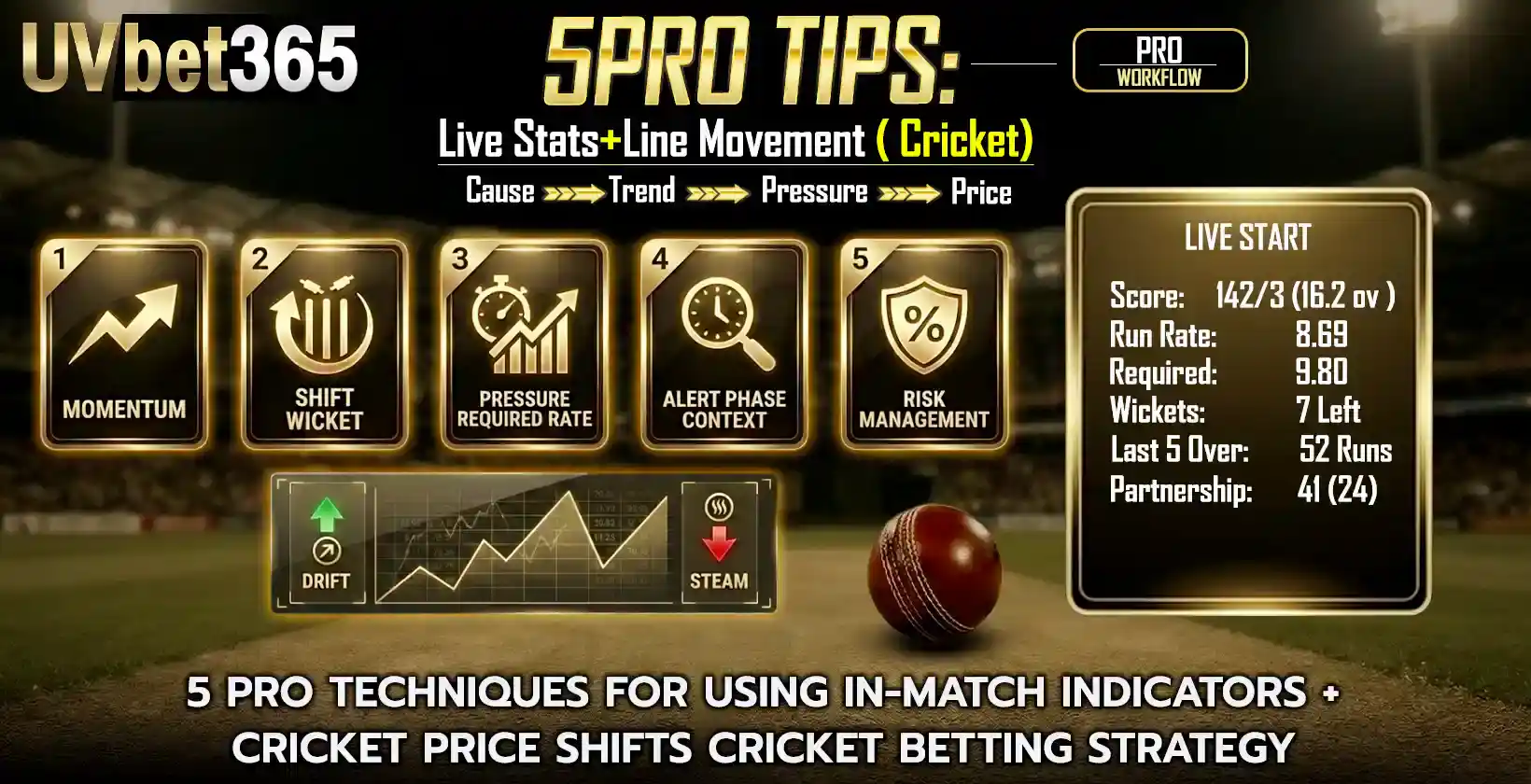
The core of an advanced cricket betting strategy especially in fixtures where pricing keeps changing is reading current in-contest information as the contest unfolds. Over time, this allows you to clearly identify key moments, rhythm, and fragility in the match. From there, the next step is checking whether price adjustments reflect what is actually happening in the game or whether they are moving ahead of it. This article summarizes five pro techniques built around in-match indicators and price shifts (excluding fundamentals) and shows how to use members-only deep tools as a practical working setup. The goal is to confirm reads faster and reduce random, emotion-driven clicks—making it ideal for readers who take sports wagering strategy seriously in betting, particularly those who place cricket betting on betting games online and want to stay ahead with evidence, not treat it like a betting game based on luck or feelings.
Cricket Betting Strategy The Advanced Reading Framework (Read – Confirm – Price Shift)
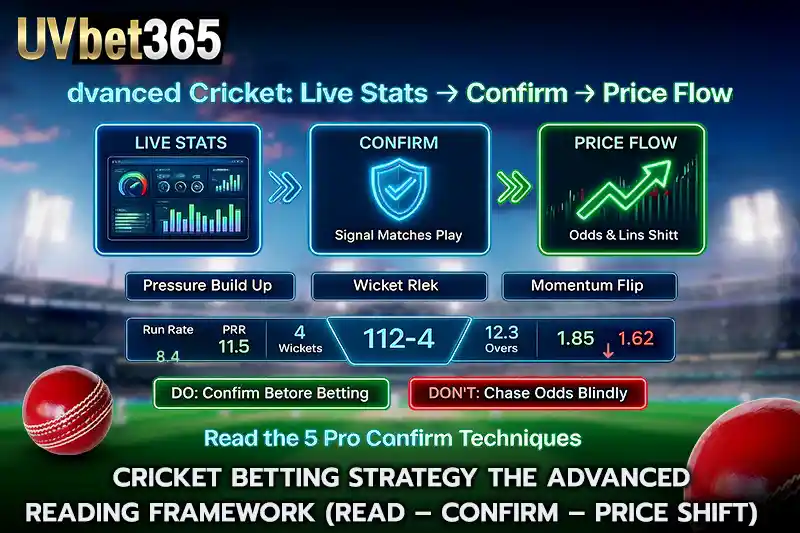
Confirm means validating your read with in-contest indicators first, then using the adjustment as supporting input for the decision.
Treat in-match signals as the actual state of the game (key moments/tempo/fragility). Rate changes are the crowd’s reaction to new information. A sudden jump can hint at sentiment, but it should never be your starting point—because it can spike early or whip around after short bursts that don’t reflect the game.
That’s the foundation of cricket betting strategy: evidence leads first, A brief micro-shock can trigger a bad click if you don’t validate the game situation beforehand.
The Sequence You Repeat Every Time
- Start with the indicators panel to form a clear read of the game
- Check whether the read holds—or if it was only a short burst
- Compare whether the adjustment is consistent with what you see in the game
This framework reduces emotion-driven clicking and lowers the chance of getting misled by fast updates inside a cricket betting game, especially when figures change rapidly in wagering.
How to Apply It in Action (Two Views, Same Selection)
- The signals view (Event Timeline, tempo, fragility): not just watching the rate, but reading the evolving shape of the game
- The pricing board for that same selection
Summary: The “Read – Confirm – Price Shift” framework is the foundation of advanced cricket betting strategy because it forces you to understand the situation first and let pricing react—rather than chasing the change alone.
Key Live Stats Terms You Need to Know Before Reading Line Movement
These terms repeat throughout all five techniques so you interpret adjustments consistently:
- Indicators: in-match inputs used to understand “key moments, tempo and fragility” in the game
- Price shift: a fast adjustment based on new information
- Rolling Trend: a quick snapshot of recent cadence
- Event Log: a sequence of key moments used to spot turning points in the game
- Stability Gauge: values or graphs showing whether the situation is “stable” or “fragile”
5 Pro Indicator + Price-Shift Techniques
Below are five advanced cricket betting strategy techniques that focus on reading the data quickly before reacting to rapid adjustments. These are best suited for fast-moving cricket betting environments where updates are frequent.
Technique 1: Event-First — Catch the “Impact Moment,” Then Judge Whether the Adjustment Is On Point or Overreacting
Core idea: In a cricket game, there are “impact moments” that trigger rapid updates. Most people lose their edge by chasing the jump before checking whether the situation truly supports the game.
How to Do It (3 Beats):
- Spot the moment in the Event Timeline and don’t rush to follow the jump
- Check the Rolling Trend immediately afterward to see whether the shape change continues in the contest
- Then compare it with the adjustment inside the same selection
Read the Outcome:
- If the update continues and signal verify it → the move often has weight
- If the figure spikes, stalls, or snaps back while the situation still looks unstable → be cautious of overreaction
Why it works: You’re reading “moment → impact → crowd reaction,” not chasing a single tick that may not match the game.
Technique 2: Dual-Trend Filter — Compare Short-Term vs Mid-Term Tempo Before Trusting the Move
Core idea: Many patterns are short-burst illusions. If you only look at one brief window, you’ll believe the jump too early.
How to Do It (Two Conditions):
- Short-term tempo looks strong but the mid-term trend doesn’t follow → not stable yet (don’t give it extra weight)
- Short-term and mid-term align → the move carries more weight because the base tempo supports the contest
Make Dual-Trend your first gate. It cuts false reads and stops you from chasing every jump.
Technique 3: Pressure Reading — Separate Situations That Look Calm but Are Ready to Flip
Core idea: Sometimes headline summaries look calm, but the underlying situation is fragile and ready to flip. That’s when figures often whip quickly after fresh information hits.
Pressure indicators help you distinguish stability from fragility instead of falling for clean summary values.
How to Do it (3 Checks):
- Read the gauge or graph: stable or fragile
- If fragility is high and sustained, follow the rule: confirm first, then act
- When pricing jumps, ask: “Is this reflecting fragility we already see, or is it running too far?”
Using the members-only deep toolkit
Treat these three views as your working core:
- Event Timeline to catch the key moment in the contest
- Rolling Trend (snapshot) to verify whether the cadence is genuine or only a short burst
- Pressure indicators to measure fragility before the next swing
When all three point the same way, let the jump be a second confirmation, not your first trigger.
Technique 4: Log-to-Entry — Don’t Enter at the Moment; Enter When the Post-Event Picture Stabilizes
Core idea: The edge isn’t only spotting the moment—it’s reading the post-event effect correctly and entering once the picture starts to settle.
How to Do It (2 Steps):
- After the moment, pause and watch Rolling Trend and pressure signals for 1–2 short windows
- If the picture starts confirming (continuing tempo or sustained fragility), use the update as confirmation
If the figure jumps hard but signals don’t confirm yet, the action is incomplete—wait.
Advanced Advantage: You’re not racing the first second—you’re reducing snap-back risk through confirmation.
Technique 5: Indicator–Pricing Consistency — Compare “What’s Happening” vs “How the Figure Updates” to Avoid Traps
Core idea: Two situations cause the biggest mistakes:
- The figure jumps first, but the current picture hasn’t changed
- The current picture shifts clearly, but the figure reacts slowly
How to Do It (Two Cases):
- The figure jumps hard but indicators don’t change → wait for confirmation (avoids traps and fast snap-backs)
- Indicators shift clearly but the figure is slow → you may see it before the crowd fully reacts (still keep Confirm as the gate)
For players who face unusually frequent price swings: especially in markets where buy–sell pressure is clearly visible—such as Back and Lay betting in cricket—odds open spike and snap back due to short-term order flow. In this case, stick to the same rule: wait for Live Stats to confirm the signal before following the move.This helps filter out false signals caused by temporary market pressure rather than a real shift in the match.
Hard Rule: Always compare within the same selection. Keep both views aligned—don’t jump contexts.
Cricket Betting Strategy The 30-Second Pre-Decision Workflow
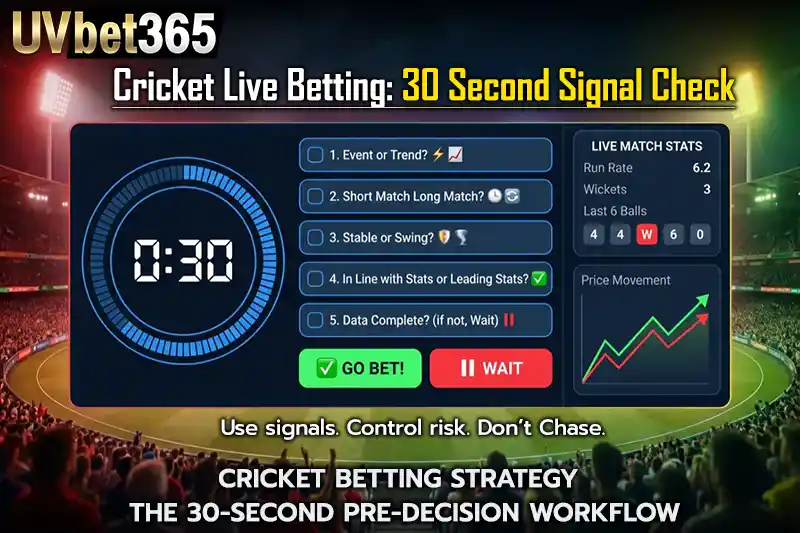
To make all five cricket betting strategy techniques usable in action, use this checklist to Technique to Confirm Signals Before Following Cricket Line Movement before every click:
- Is the adjustment driven by an impact moment or by a tempo build?
- Does short-term tempo align with the mid-term trend?
- Does the Pressure Indicator look stable or ready to flip?
- Is the adjustment consistent with the current picture—or is it running early?
- Are conditions complete yet? (If not complete = wait)
Tie the 5 Techniques to Members-Only Deep Tools to See Reads Before the Crowd
For readers who focus on evidence-driven cricket betting strategy, members-only deep tools (Event Timeline , snapshot, and stability in one place) should be treated as a working layout, not a casual viewing page—especially for fast decisions in a cricket betting game.
How to Set Up Your Workspace (3 Steps)
- Open two views side by side
- The members-only deep toolkit (Event Timeline + snapshot + stability)
- The pricing board (same selection)
Pair Techniques to Match Your Style
- (Technique 1 + 4) for “moment → post-event impact” readers
- (Technique 2 + 5) for “trend filter → consistency check” readers
- Add Technique 3 as your second layer once you read tempo smoothly, to measure fragility before flips
Conclusion
In summary, all five techniques are built on the Read/Confirm/Price framework to prevent impulsive, guess-based decisions on price movements. This approach shows how to play online cricket betting by reading the match from evidence and managing risk more effectively.
That’s the core of an advanced cricket betting strategy: using deep tools as a real decision system—reducing random chasing and keeping decisions anchored in evidence rather than emotion, for people operating in betting who want to move from guessing to controlled discipline.In short, don’t use rate cricket as the only data point for your decision. Let Live Stats confirm the signal first, then compare it with the price movement.